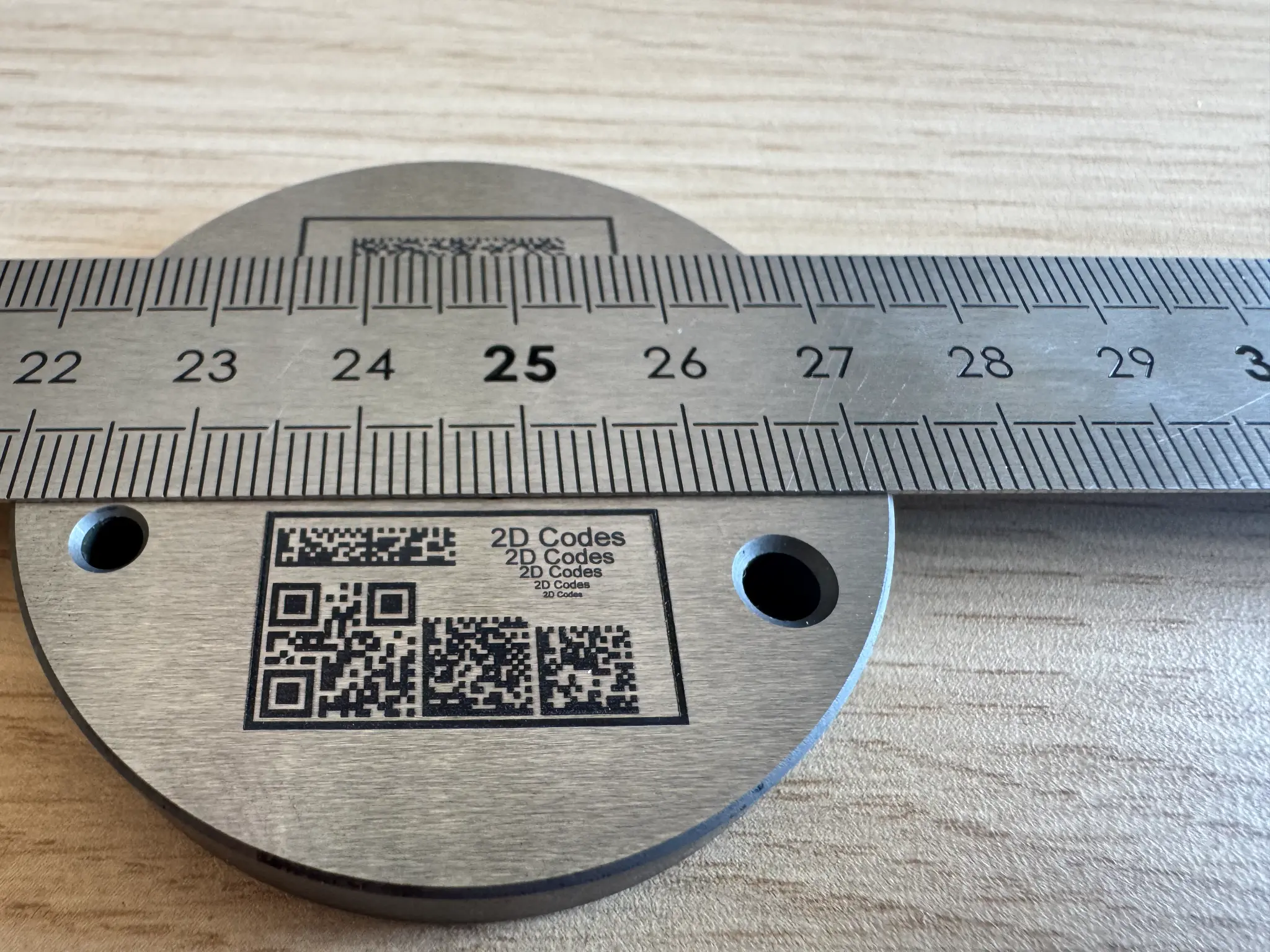
The size of a DataMatrix is not decided in isolation. The data to encode, available area, material, contrast, reader, throughput and inspection form a single direct-part-marking project.
An industrial DataMatrix must be read in the right place, at the right time and using the method actually planned for the production flow. The symbol size therefore results from a set of constraints: data, available area, finish, marking process, reading environment and expected inspection level.
FOUR GUIDELINES
Start with the required reading.
Correct sizing is not about seeking the smallest possible code. It is about defining what must remain readable on a real part, under conditions representative of production.
01
Define the data
Part number, serial number, lot, date or variable data do not take up the same space. The exact content must be finalized before the marking area is fixed.
Fixed readers, handheld readers, vision cameras or quality stations require distance, lighting, presentation and resolution conditions to be qualified.
ElementQuestion to askTo be qualified on the partImpact on the projectInformation to provide
Encoded dataWhich information is fixed or variable?Structure, density and any need for human-readable textSymbol format and sizeExample of data or applicable specification
Available areaWhat surface area is actually usable?Geometry, orientation, periphery and accessibilityLocation and space around the codeDrawing or dimensioned photo of the area
Material and finishWhat appearance is acceptable on the surface?Contrast, integrity, roughness, reflections and durability in useProcess to be studied and quality criteriaGrade, treatment and sample Qualify a DataMatrix on copper and busbar
Intended readingWhat system will be used to read the code?Distance, lighting, position and field of viewModule, resolution and inspection logicReader or camera model
Production rateWhen is the code marked and then inspected?Fixture, cycle, handling and failure handlingIntegration and repeatability of the resultProduction rate and workflow description
For GS1 DataMatrix, the quiet zone provides a design reference around the symbol. The applicable standard, verification method and acceptance criteria remain to be defined by the project.
READ AND VERIFY
A code read once has not yet been validated.
A useful result is not just the appearance of the marking. It is achieved through repeatable reading and an inspection protocol consistent with the product, production and specifications.
01
Read under real-world conditions
Part position, lighting, distance, oil, dust, oxidation or reflections can affect reader performance. The test should closely replicate the intended workflow.
02
Define the appropriate inspection
A single successful decode does not automatically replace a verification method. The expected level must be defined in line with the specifications and the chosen inspection method.
In production, the project plans for inspection, handling unreadable codes, traceability of results and retention of the settings that must be kept.
ON THE PART
The evidence must be read in context.
A photograph of a code is no substitute for verification. It helps frame the discussion about the part, marking and reading before the representative test.
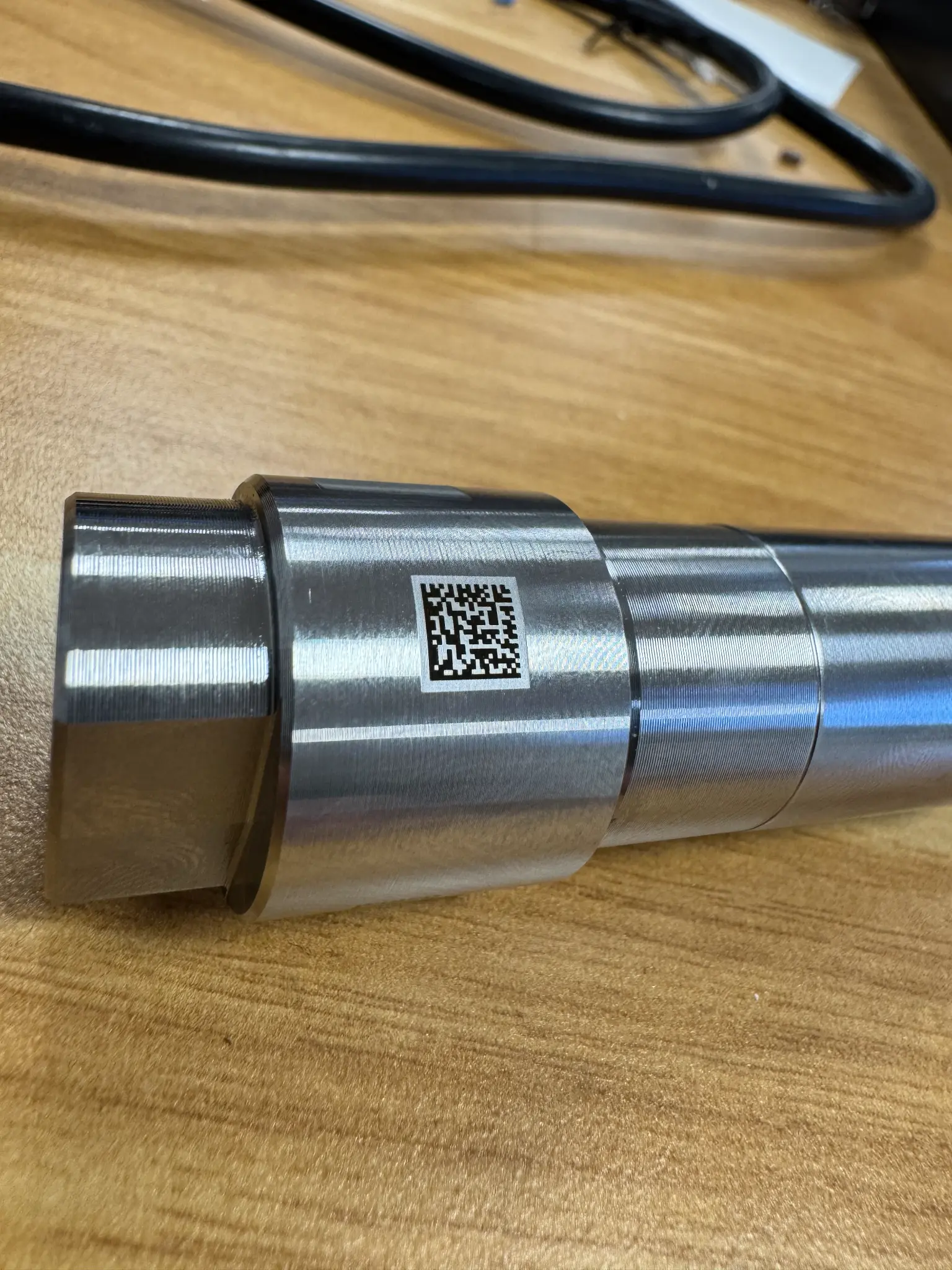
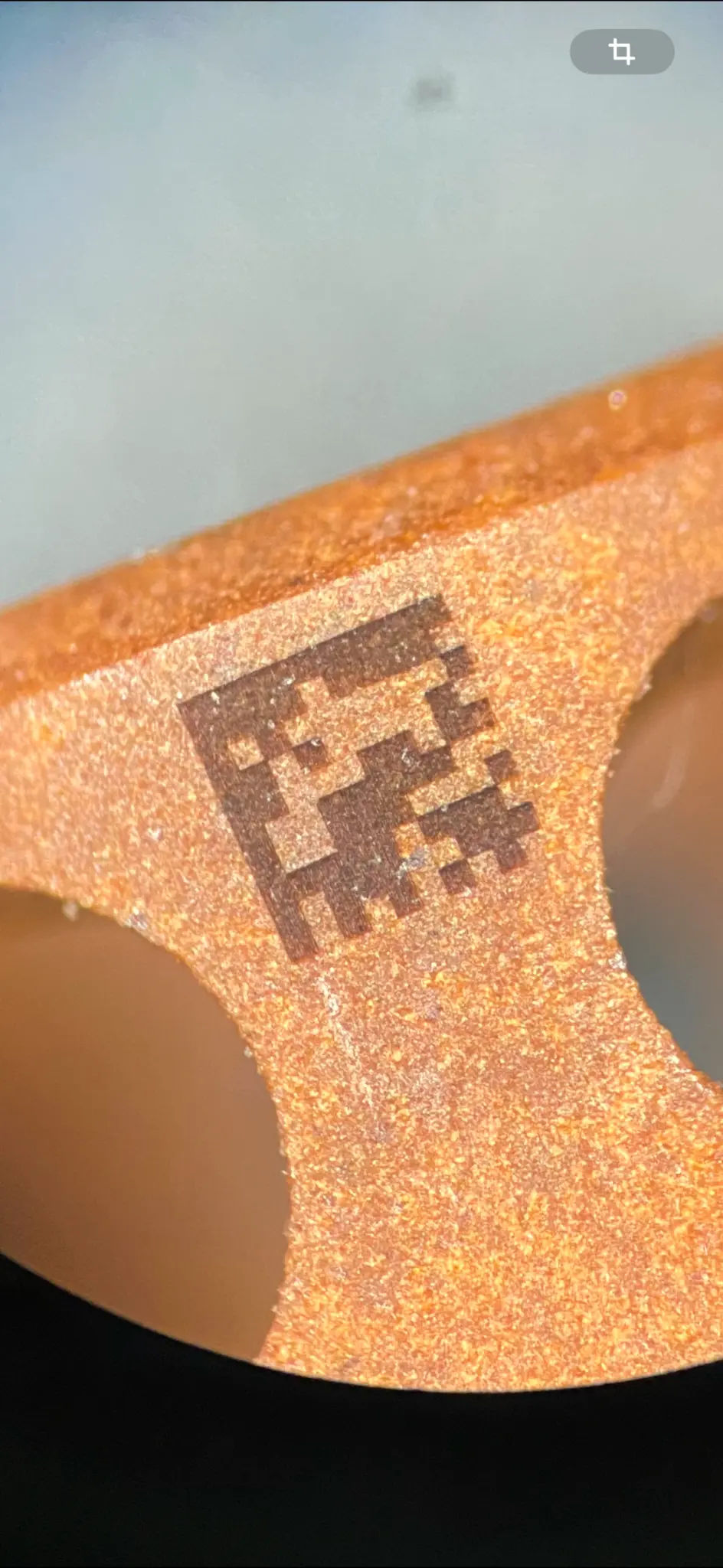
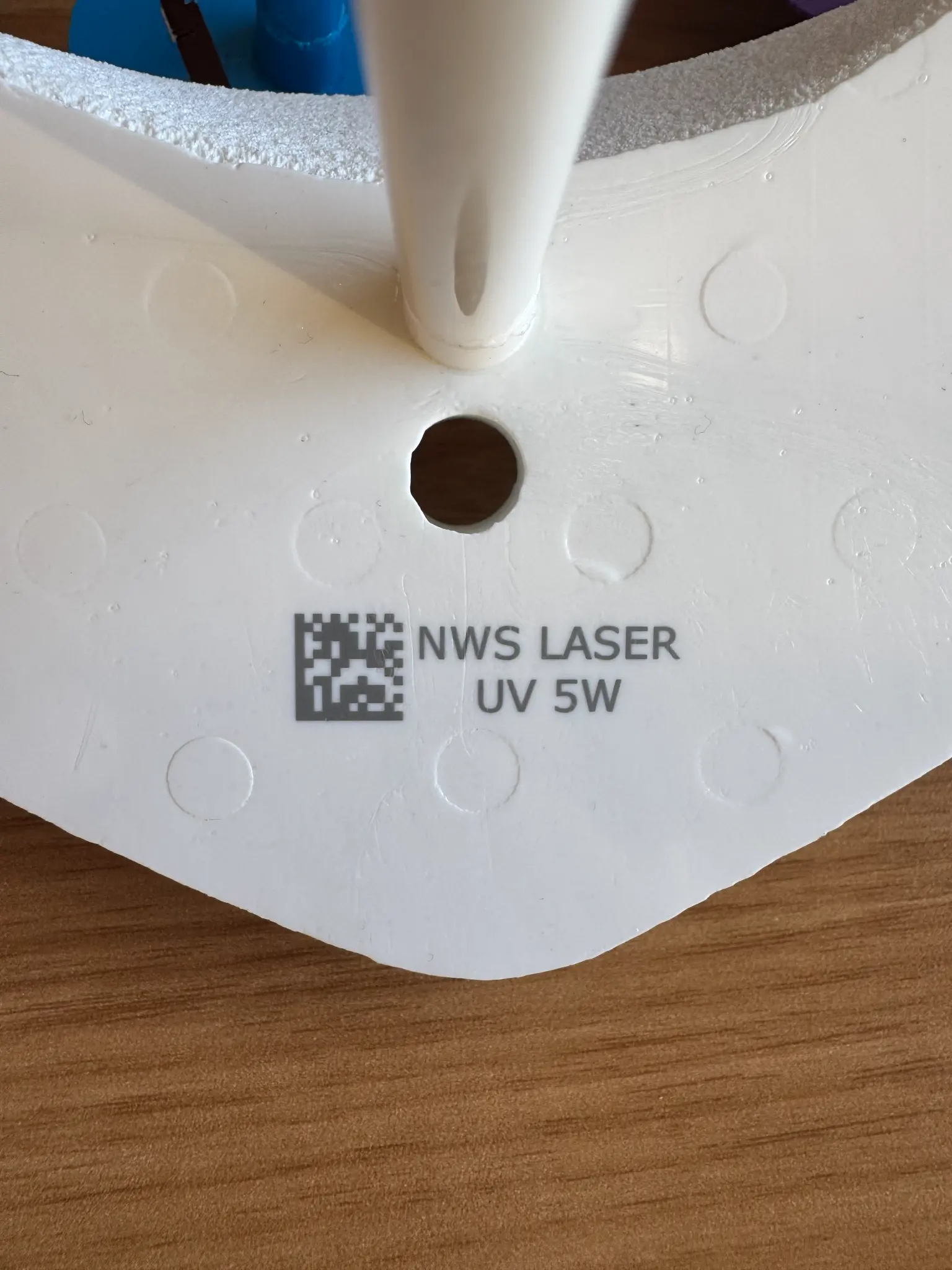
DataMatrix on a cylindrical part — curvature and presentation to the reader are part of the study.Micro-DataMatrix of 0,4 × 0,4 mm on polymer — fine detail, contrast and reading must be qualified on the part.DataMatrix and text on a polymer part — code format, material and reading are interrelated.
QUALIFICATION PROTOCOL
From the test to the usable cycle.
StepProject inputsWhat the test verifiesDecision to makeExpected output
PreparePart, finish, area, data and production rateArea feasibility and process constraintsRepresentative test conditionsSample and protocol agreed upon
MarkPart fixtured in conditions close to real-world useAppearance, contrast and marking repeatabilityParameters to investigate further, with no generic recipeSeries of comparable tests
ReadIntended reader or camera and associated environmentDecoding and behavior under the intended conditionsPosition, lighting and reading strategyUsable reading results
InspectQuality criteria and method selected for the projectAcceptance criteria, thresholds and traceabilityInspection method to be integratedValidation protocol defined
IntegrateFixture, production rate, data capture and handling of deviationsComplete cycle, nonconforming parts and operational robustnessStation or line architectureProcess direction and integration
Standards and recommendations provide guidance; they do not replace the specifications applicable to the part, industry or customer. A DPM approach may, in particular, rely on the method selected for the project.
FREQUENTLY ASKED QUESTIONS
Before finalizing the DataMatrix.
What size should you plan for a laser-marked DataMatrix?
There is no universal size. The data to be encoded, the available area, the material, the process and the intended reading method must be considered together on a representative part.
Is a visually clear DataMatrix code necessarily readable?
No. Contrast, module geometry, lighting, how the part is presented, and the reader or camera also affect the usable result.
Should the reader be specified before the laser?
The reading method is part of the project. Its distance, lighting, field of view and production conditions help define the code and then qualify the marking process.
What is the quiet zone of a DataMatrix?
The quiet zone is the reserved space around the symbol. For GS1 DataMatrix, a design guideline is at least one module on each side; the project specification and inspection method remain decisive.
What should you provide to prepare a DataMatrix trial?
A representative part or sample, the material and finish, the available area, the data to be encoded, the production rate and the intended reading method make it possible to prepare a useful initial study.
DATAMATRIX STUDY
Send us your part to qualify marking readability directly.
Provide the material and finish, a photo or drawing of the area, the data to be encoded, the production rate and the intended reading method. NWS Laser will recommend a process direction rather than make a generic promise.
PROJECT CALLBACK
Let’s arrange your callback.
Leave your contact details: an NWS Laser representative will get back to you to position your project and the next useful step.
REQUEST SENT
Thank you. Your form has been submitted.
The NWS Laser team has received your inquiry and will contact you shortly.