Photo‑chemical interaction
A short wavelength promotes a surface action suited to applications that require controlled intervention.
NWS Laser EXPERTISE · UV 355 NM
The UV laser targets applications where the marking must coexist with the surface: anodizing, passivation, PVD, DLC, rhodium plating and other sensitive coatings.
THE CHALLENGE
A useful mark must remain legible, durable and controlled. When the part carries a functional or aesthetic layer, the process must be qualified both for the desired contrast and for its interaction with the surface.
THE PROCESS
This local page covers the key aspects of the UV dossier: focused energy, control of thermal impact and marking precision.
A short wavelength promotes a surface action suited to applications that require controlled intervention.
The UV regime enables exploration of contrasts or surface changes when heat diffusion must be managed.
Beam, fixture and cycle settings must be qualified on real parts before selecting a solution.
SEE THE PROCESS
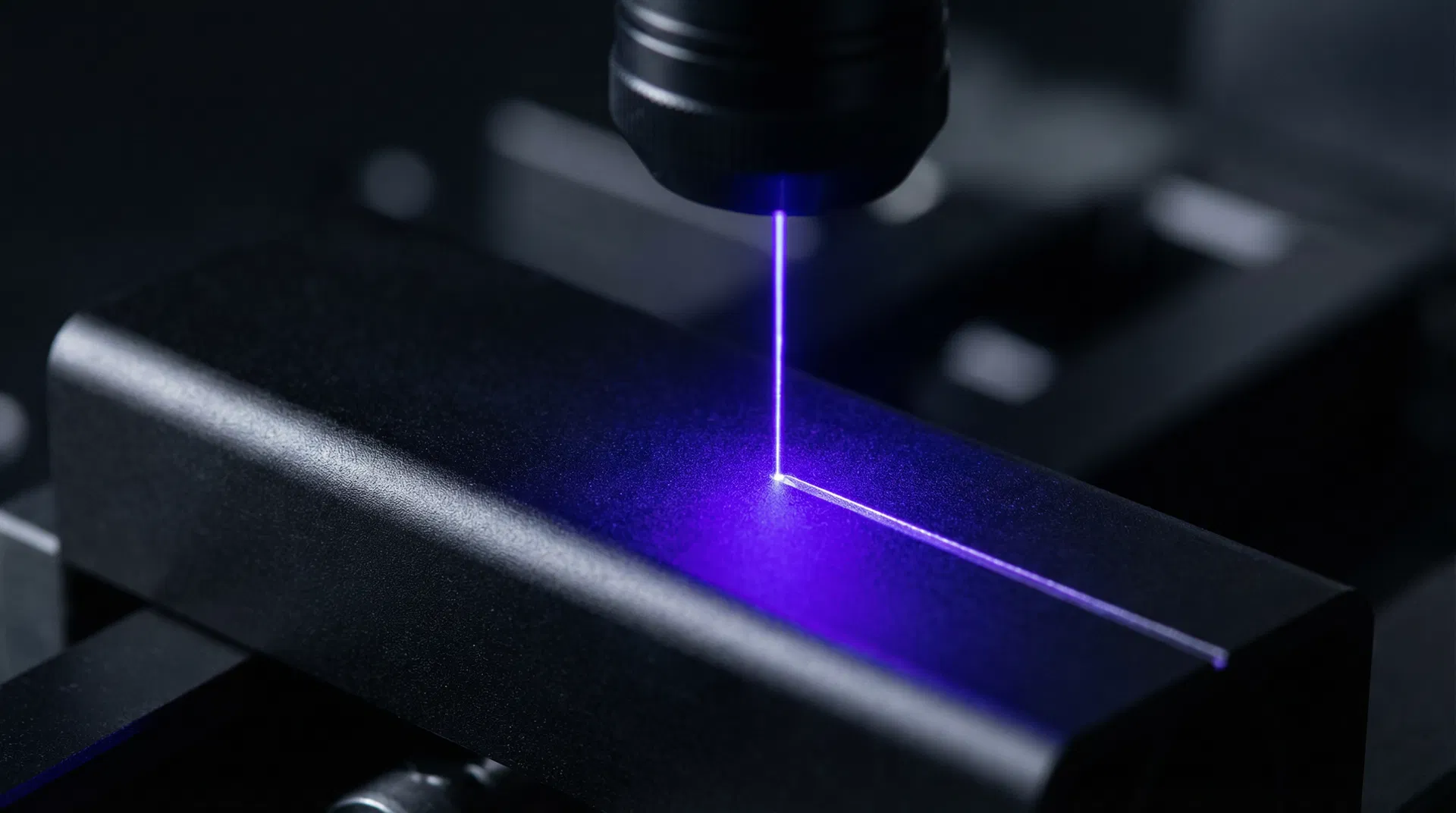
The original visual shows the tangible interaction between the physical principle and the part to be marked.
CHOOSE THE PROCESS
Indicative comparison: the final choice depends on the material, the coating, the geometry, the desired finish and production conditions.
APPLICATIONS TO QUALIFY
AEROSPACE · INDUSTRY
Identification, locating or customization on anodized parts, with attention to visual appearance and the surface layer.
MEDICAL · TECHNICAL
Applications where surface finish and service cycles require marking qualification directly on the part.
LUXURY · MICROTECHNOLOGY
Cases where contrast, fineness and preservation of the part’s aesthetics are part of the specifications.
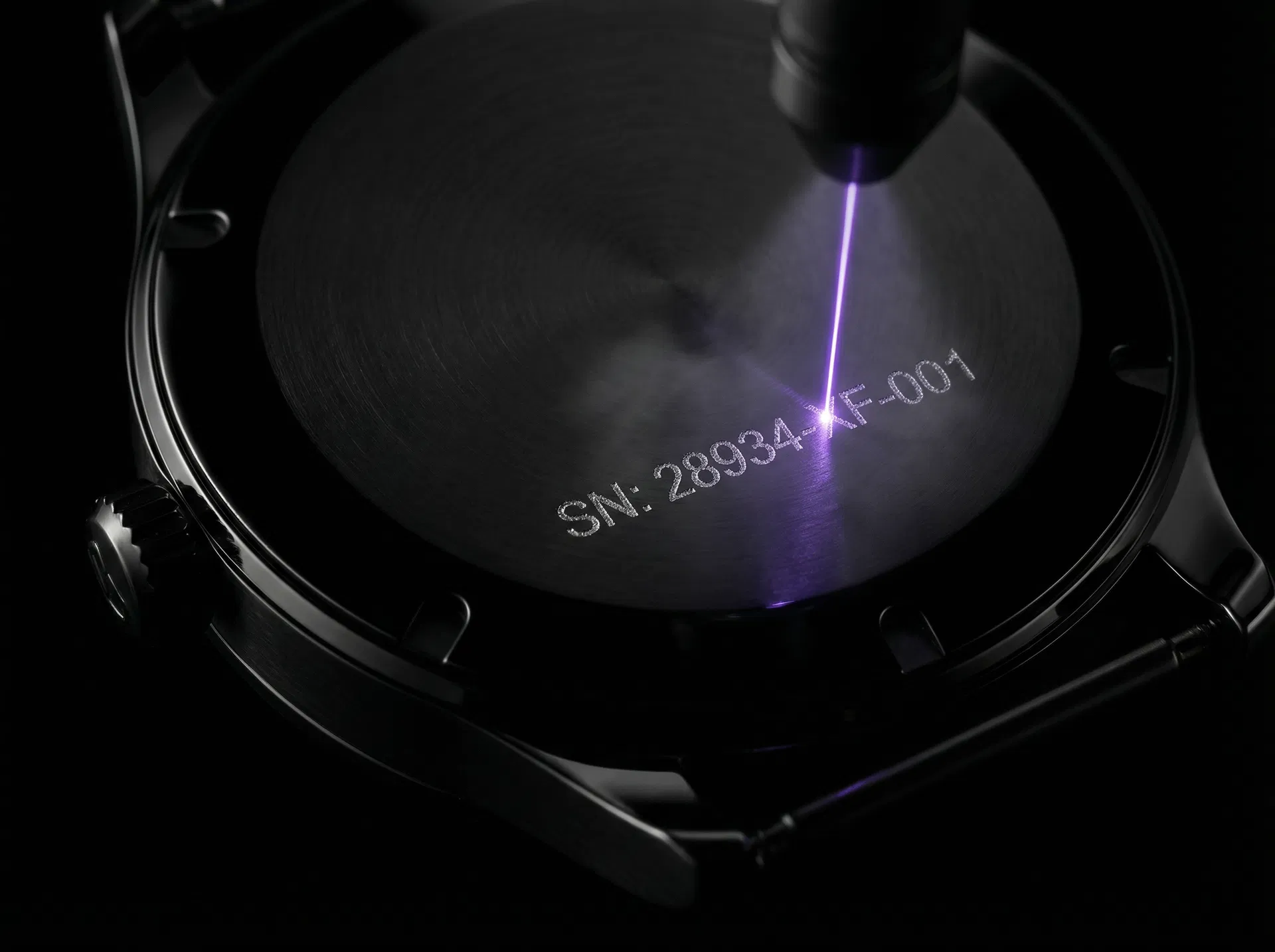
UV APPLICATION STUDY
Send a part or describe your material, its treatment and the expected result. NWS Laser qualifies the process with you.