Identify the layer and substrate
The film composition, the aluminium layer and any protective coatings guide the tests. The area to open and acceptance criteria must be defined before development.
SECURITY FILM · LAYER ABLATION
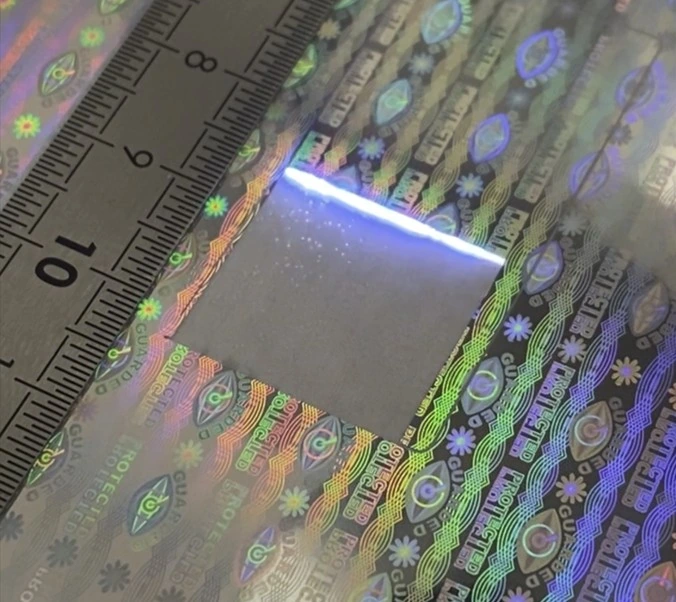
Locally remove an aluminium layer on a holographic security film using a high‑energy MOPA 20 W laser.
This application processes a holographic security film that includes an aluminium layer. The laser performs localised ablation of that layer in the defined area. This is material removal, not a simple colour change.
The source used is a high‑energy MOPA 20 W laser. Pulse settings and scanning strategy are developed according to the metal layer and the film structure. Removal quality and the condition of the substrate must be checked on the actual sample.
REMOVE A LAYER, VERIFY THE SUBSTRATE
The film composition, the aluminium layer and any protective coatings guide the tests. The area to open and acceptance criteria must be defined before development.
The high‑energy MOPA 20 W allows pulse shaping for this application. Scanning patterns and passes are adjusted on the real film. Wattage alone does not define the energy of each pulse.
Inspection focuses on aluminium removal, edge quality and substrate condition. The security functions of the film must also be verified after processing.
On a drawing or an annotated view, distinguish the areas to be opened from the areas to be left intact. Indicate the relevant dimensions, the orientation of the pattern and the reference points available on the film. If several versions of the design exist, identify the one to be used for the trials and specify its scale.
What positioning tolerance do you require relative to the holographic pattern? Should any contours be examined as a priority? These details need to be specified before the working file is selected, without inferring an achievable level of accuracy from the illustration on this page alone.
Associate each sample with a film reference and, if this information is available, with its batch. Report any known differences between the proposed versions rather than grouping them under a single designation. An annotated photograph can indicate the relevant side and the direction in which the pattern is to be viewed.
Will the film be presented on its own or already incorporated into a part? What holding arrangements and access to the area need to be considered? Describe the intended situation, then agree during the study on the conditions for presenting and handling the samples.
Turn general expectations into criteria that can be discussed for an identified area. For each observation, specify the proposed method, the person responsible for validation and the comparison reference. An untreated sample may be proposed as a control; its value and the comparison arrangements remain to be agreed.
In particular, prepare the following questions to distinguish a visual preference from a functional requirement:
Bring together the film reference, the selected design, the annotated views and the criteria to be discussed in your application study request. Distinguish confirmed data from information still awaited from the supplier or your quality team. Also mention the points on which your decision to continue the trials depends.
To prepare for the discussion, the explanations of MOPA technology provide context for the process presented. The machine catalogue provides a general reference, but does not by itself identify a configuration suited to your film. Any eventual choice remains to be examined on the basis of the actual application file.
APPLICATION STUDY
Provide the film structure, the metal layer, the area to treat and the functions to preserve. The NWS Laser team will prepare an ablation trial on your samples.