Structure the elements to be marked
Identity data and the portrait must be defined according to the card layout and reading requirements. Character size, portrait detail level and placement guide the testing.
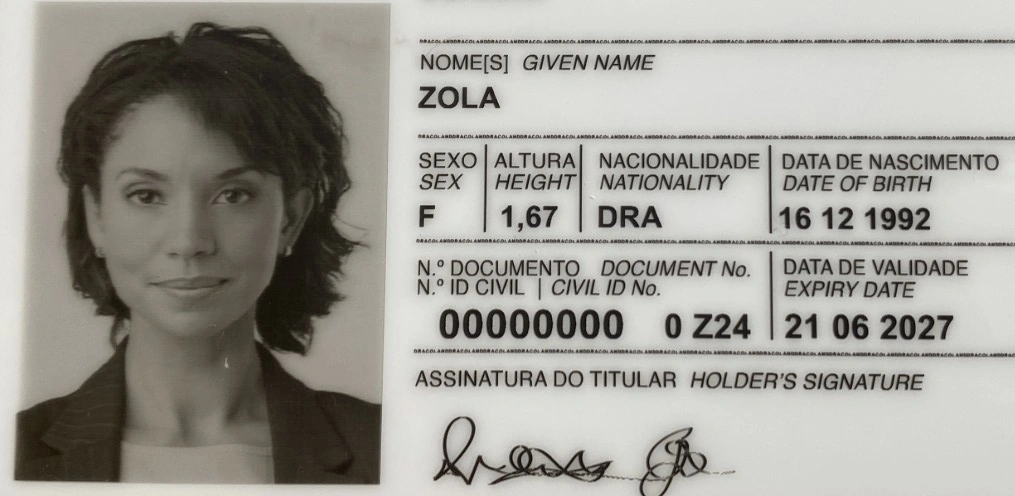
IDENTIFICATION · IK-SERIES HYBRID LASER
Identity data and a portrait marked directly on a plastic card with the IK-SERIES high-energy hybrid laser.
This application covers marking identity data and a portrait on a plastic card. The visual combines the card’s required information and the cardholder’s image, with readability optimized for the medium and card format.
Marking is performed with the IK-SERIES high-energy hybrid laser. Portrait definition, data sharpness and surface appearance must be evaluated on the actual cards used. A test on the real plastic is required to qualify settings, achieved contrast and readability under the intended conditions.
DATA AND PORTRAIT TO QUALIFY
Identity data and the portrait must be defined according to the card layout and reading requirements. Character size, portrait detail level and placement guide the testing.
The card surface can affect contrast and marking appearance. IK-SERIES laser parameters must be qualified on the actual medium, considering its surface condition and finish.
Readability of the data and portrait must be verified on marked cards under the intended observation conditions. This check confirms the result before further deployment.
Prepare a diagram of the relevant face, with an orientation reference point and the dimensions of the reserved area. Which elements are already present on the card? Which areas must remain unchanged? Indicate the desired spacing between the portrait, the identity fields and the other elements of the document, distinguishing fixed requirements from choices that are still open.
Identify the exact reference of the cards proposed for the trial and specify whether several versions are involved. For each one, record the available information about the substrate and its finish. Differences between versions will be points to be examined, without assuming a common result.
Separate the presentation layout from the variable content. Include fictitious examples with a long name, accented characters and the other symbols needed for your use. Specify the expected rules when the content exceeds the allocated space: adapting the layout, permitted abbreviation or another approach to be agreed.
For the portrait, identify the source file and the selected version, then indicate the desired crop. Which details will need to be examined first? A clearly named reference file avoids comparing trials based on different portraits or layouts. The usable format remains to be specified during the technical discussion.
Distinguish the criteria concerning the data, the portrait and the appearance of the card. For each point, indicate who will decide on acceptance and by which method. Technical expertise can serve as a starting point for framing these questions, without replacing validation for your application.
Group the card reference, area diagram, layout, data examples and your criteria in a file carrying the same version. Report missing information and decisions that are awaited. Presenting the IK-SERIES used in this application puts the example in context, but does not prejudge the choice for your card.
To prepare the application study, also name the contact responsible for validating the content and the one responsible for accepting the appearance. The trial arrangements and precautions specific to the parts submitted remain to be agreed.
APPLICATION STUDY
Provide the actual plastic card, the identity data to mark, the expected portrait and the reading conditions. The NWS Laser team will prepare a test tailored to your application.